

DCW Monthly: September 2026
This month's content returns to a question the rules answer clearly and the courts sometimes do not: who
This month's content returns to a question the rules answer clearly and the courts sometimes do not: who

Talk of a trade’s digital transformation is in the air, but ICC UAE convened a focused stakeholder forum to

With the latest annual update to formats and rules on the Swift network approaching in November, Swift agreed to a
In any serious discussion of letters of credit law and practice anywhere in the world, one name regularly surfaces – that of Professor Boris Kozolchyk. From the appearance of his masterful treatise, Commercial Letters of Credit in the Americas in the 1960s, Professor Kozolchyk has played a leading role in the field of letters of credit.
His contributions are legion. He has been aptly described as the leading light in the formulation of UCP 500. His work at the United Nations Commission on International Trade Law’s Working Group which drafted the UN Convention on Independent Guarantees and Stand-by Letters of Credit was highly significant as was his role in the revision of UCC Article 5. He has played an important role in the effort now underway to formulate the International Standby Practices. During this entire period, he has continued to write articles and books which probe the intellectual frontiers of the relationship of law and commerce, including the nature of bills of lading, electronic letters of credit, and standby letters of credit. Much of this work will culminate in the revision of Commercial Letters of Credit which will be published as Kozolchyk on Letters of Credit and Bank Guarantees.
His interest in the field stemmed from his reading of the dissenting opinion of Justice Cardozo in O’Meara v. National Bank, 239 N.Y. 386, 146 N.E. 636 (1925). The point, as recalled by Kozolchyk, was a moral one relating to good faith. “While Cardozo agreed that the bank is under no duty to investigate alleged fraud, he asked what if it becomes aware of it? Should not the most elementary good faith requirement cause the bank to, at least, pause until the matter is sorted out in court, particularly if the claimant is the fraudster and not an innocent purchaser of his draft? To a searching neophyte, (which is what I was) a field of law that generated this level of analysis seemed worthwhile.”
The project which has consumed much of Professor Kozolchyk’s time in recent years has been the Tucson-based National Law Center for Inter-American Free Trade which he founded in 1992. The Center is a tax exempt non-profit research and educational corporation whose mission is to bring about the legal implementation of the North American Free Trade Agreement (NAFTA) and other free trade agreements in the Western Hemisphere. To achieve its mission, the Center seeks to modernize and harmonize commercial and related laws and practices and to standardize legal documentation in the NAFTA region. The Center’s various projects serve to identify and eliminate the structural legal obstacles to free trade, and thereby contribute to the facilitation of trade and investment between the developed and developing worlds in the global economy. In its various projects, the Center brings together legal, commercial, governmental, and academic sectors, drawing the praises of heads of state in the United States, Canada, and Mexico.
Following a meeting of the Organization of American States honoring Kozolchyk, US President Bill Clinton expressed his appreciation, “ ... I want to congratulate Dr. Kozolchyk for his work in establishing the National Law Center for Inter-American Free Trade. ... it is your commitment and the commitment of other dedicated individuals at the state and local level that will make this path-breaking agreement a reality. Thank you for your participation and support.”
Said Jean Chretien, Prime Minister of Canada, “ ... the Center has become a uniquely important and valuable institution ... it is reflective of Boris’ sustained commitment to the goals of normalizing trade practices throughout the Americas and promoting uniform legal structures to facilitate that objective.”
In all of these endeavors, Kozolchyk has sought to understand and express underlying principles. Says Documentary Credit World editor, James E. Byrne, “Boris has never been satisfied with arbitrary rules. He has always respected rules of custom and practice but sought to understand the practices which gave rise to the rules. From this understanding, he has helped us all to understand how to better frame the rules to serve commerce. He is a true visionary whose hard work has had a profound impact on all with whom he has come into contact.” Wrote the late Charles Bontoux, Vice President of the ICC Banking Commission, “(When) history of letter of credit law in the 20th Century is written, we will have to say before and after Boris Kozolchyk.”
Professor Kozolchyk is best known in the letter of credit community for his formulation of the standard by which documents are examined. Long dissatisfied with the crude notion that document examiners were “dumb” and, so, had to work by simplistic rules, he explored the notion of the standard of compliance with the belief that the use of a mechanistic standard was seriously damaging correspondent banking relationships. The result was the formulation of the notion that examination later takes place by professionals according to standard international banking practice as reflected in UCP Article 13.
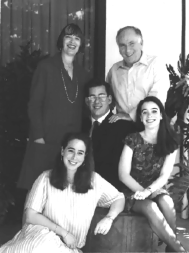
Kozolchyk and wife, Billie, reside in Arizona. Their three children, Abbie, Rafael, and Shaun are beginning their own careers as young adults. When not with the activities of the National Law Center, Kozolchyk enjoys classical music and playing racquetball.

Documentary Credit World is pleased to announce the addition of Edward R. Stoltenberg to our Editorial Advisory Board (EAB). Edward

Documentary Credit World is pleased to announce the addition of David Williams to our Editorial Advisory Board. David is based
DCW is pleased to welcome Zahoor Dattu, Ahmir Mansoor, Glenn Ransier and Kristine Siebel to the Editorial Advisory Board.
Strabag, SpA v. Credit Agricole CIB case appeal
Gain full access to analysis, cases, eBooks and more with a DCW Free Trial